Everyone knows the Great Barrier Reef is under significant stress, along with reefs the world over.
Coral reefs are crucial to the planet’s survival. Though coral reefs occupy just 0.2% of the ocean floor, they are the habitat for 25% of the planet’s marine life. Millions of people around the world depend on them for food, protection, employment and recreation.
They protect shorelines, and the ecosystems and habitats within them, by reducing the impact of waves, storms and flooding.
Additionally, it is estimated that coral reefs represent a carbon sink of almost 70 to 90 million tonnes of carbon per year through calcification of coral skeletons.
The collapse of coral reefs would see the loss of food, shelter and spawning grounds for at least one million species. For humanity, it would produce significant negative impacts to the food supply and livelihoods of one billion people and jeopardise the approximately $36 billion global tourism industry that has been built around them.
Coral reefs, and the ecosystems they sustain, depend on the quality of the water within and around them.
Along with the impacts caused by warming oceans and seas, declining coastal water quality, influenced by land-based run-off, is recognised as one of the most significant threats to the long-term health and resilience of the Great Barrier Reef.
Along with the impacts caused by warming oceans and seas, declining coastal water quality, influenced by land-based run-off, is recognised as one of the most significant threats to the long-term health and resilience of the Great Barrier Reef
A land management solution
With water quality in mind, GreenCollar started work about a decade ago to try to develop a type of land management project, similar to carbon projects, that would help improve the health of the Great Barrier Reef.
At the turn of the century, the Australian and Queensland Governments commenced a joint initiative to seek measurable solutions to the Reef’s water quality problem.
Working with teams of scientists, this resulted in the issue of a report called the Scientific Consensus Statement on Water Quality on the Great Barrier Reef. The Report identified “land-derived contaminants, including suspended sediments, nutrients and pesticides are present in the Great Barrier Reef at concentrations likely to cause environmental harm”. These reports have been updated and issued every five years since 2008.
One of the most significant nutrients that flow into the Great Barrier Reef is nitrogen, which is associated with fertiliser use on agricultural land. Nitrogen runoff can trigger algal blooms which block sunlight to coral, increase diseases and shift the species composition.
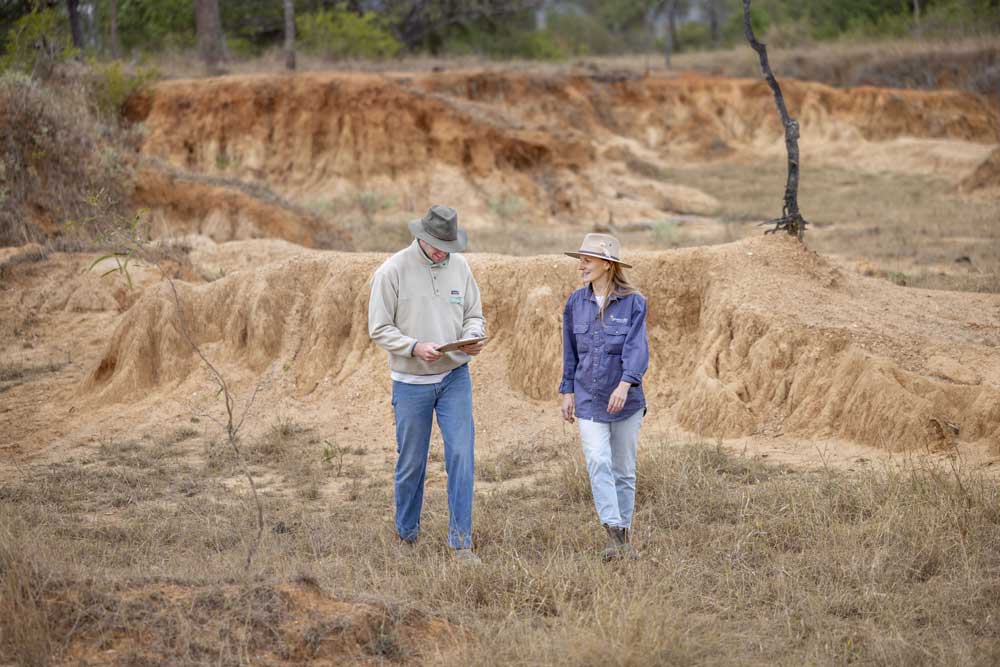
Nitrogen washes into the reef from land in the form of dissolved inorganic nitrogen (DIN), as does fine sediment from the significant levels of erosion that leave behind deep, wide gullies.
The solution GreenCollar set about designing aimed to reduce both of these contaminants through changes in land management – in a similar manner to the concept behind carbon projects.
GreenCollar worked closely with government-endorsed natural resource management organisations. We also consulted with scientists and land managers/owners, as well as other industry stakeholders and traditional owners in Far North Queensland.
Through this process, GreenCollar was able to develop the Reef Credits Scheme, which officially came into being in 2019.
Two main methods
The two main methods that were developed are known, in short-cut, as the managed fertiliser and the gully rehabilitation method.
They work on the same principle as a carbon project. Instead of amounts of carbon removed from the atmosphere, amounts of DIN and fine sediment that are prevented from entering the waters of the Great Barrier Reef generate a credit that can be sold on an environmental market. In this case, it is the Reef Credit market instead of the carbon market.
Under the managed fertiliser method, GreenCollar establishes a seven year baseline (similar to the 10 year baseline in a carbon project) by assessing records of fertiliser application, soil tests, crop and pasture yield and other land management information.
Then, when the project commences, a project plan is prepared for implementation. It outlines changes to farming practices, which are aimed at reducing the DIN used in the project area. A projection of the number of Reef Credits that the project should generate is included.
For managed fertiliser projects, one Reef Credit is equivalent to one kilogram of DIN prevented from reaching the waters of the Great Barrier Reef.
The gully method is a much more infrastructure-intensive undertaking. It involves re-engineering the landscape to remediate the sizeable erosion gullies, as well as producing a project plan to manage the land once it is reinstated. Remediation of gullies can include reshaping, revegetating, engineering control structures and managing grazing.
Planning involves land surveys, water flow modelling and aerial imagery analysis in order to prepare the conceptual designs and scope of works.
For every 538 kilograms of fine sediment that is prevented from reaching the Great Barrier Reef, one Reef Credit is generated.
On this basis, it is easy to appreciate that managed fertiliser projects have been much easier to get off the ground. They have been the source of the 46,000 Reef Credits that have so far been delivered.
However, last year, we were extremely proud to see the first gully project come into being.
The first Reef Credit project to tackle fine sediment pollution
The first gully rehabilitation project was implemented on 40 hectares by the owners of a property in the Bowen River catchment in north Queensland. The construction phase was completed in mid 2025.
It is the first gully rehabilitation project of its kind in the world using a market-based approach to catchment restoration.
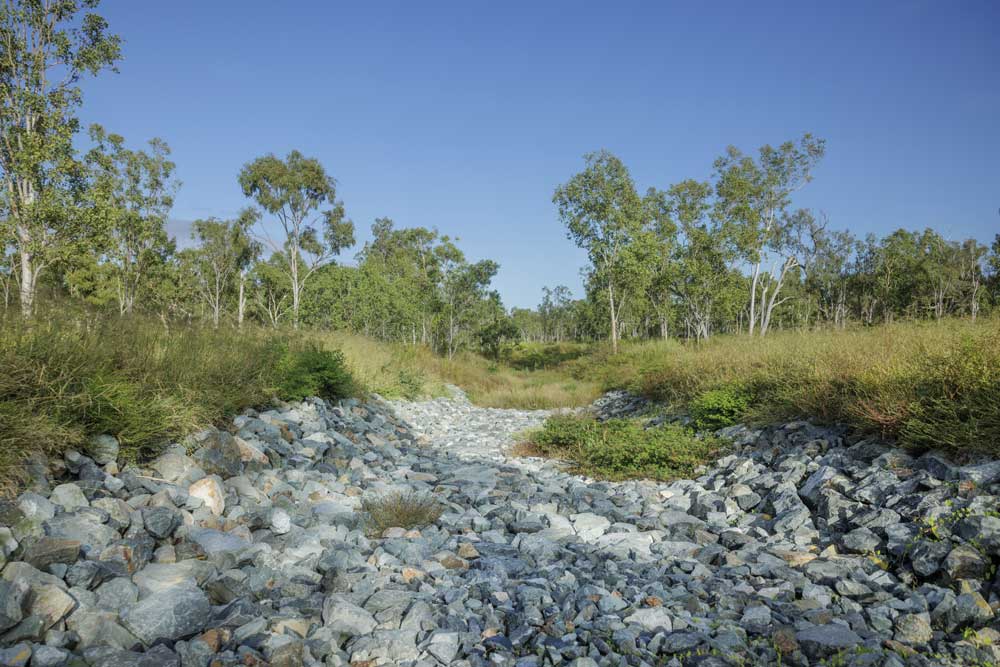
The constructed system prevents fine sediment run-off by employing erosion control techniques which include landforming, improvement in soil condition, installation of engineered controls to halt and slow sediment mobilisation and the stabilisation of soil with native revegetation. Our engineering partner was Verterra Ecological Engineering.
The project was largely made possible because of an agreement with Far North Queensland ports operator, Ports North. Ports North committed to purchasing Reef Credits from the project over three years. This will satisfy part of their approval under the Environment Protection and Biodiversity Conservation Act for their Cairns Shipping Development Project, which is deepening and widening the shipping channel network.
In effect, the amount of prevented sediment represented by the Reef Credits purchased over the three years will offset that produced by the Cairns Shipping Development Project.
At the same time, after covering the construction costs put up by GreenCollar, proceeds from the sale will go to the landholder.
The successful implementation of this project has already provided confidence in the Reef Credit market: a number of other land managers are now in the planning stages of gully projects.
As these projects scale and expand, more and more erosion gullies will be remediated, preventing significant amounts of fine sediment from entering the catchment areas which flow into the Great Barrier Reef.
At the same time, improvements in land management are helping to improve the bottom line for the agriculturalists taking on these projects.